

Liposuction for Lipedema
If your symptoms persist even though you've already tried a lot of things.
When liposuction becomes an option for lipedema
Many patients come to us because they’ve already been through a lot. They’ve worn compression garments, tried lymphatic drainage, made sure to stay active, and done many other things to relieve their symptoms. Yet they often still experience pain, tenderness, heavy legs or arms, and a growing sense of being limited in their daily lives.
This is precisely the point at which many people begin to wonder whether liposuction might be the next sensible step. Surgical treatment is not a decision to be made lightly, but is always part of an individualized medical assessment. The key factors are the severity of your symptoms, the extent of the condition, and the degree to which lipedema affects your daily life.
On this page, we’d like to provide you with a clear overview of what liposuction can do for lipedema, when it might be an option, and how the treatment process works at our clinic. It’s important to us that you’re not only well-informed medically, but also get a sense of which approach might be right for your specific situation.
In Bonn and Cologne, we support patients with our expertise, experience, and a clearly structured treatment plan. From the initial assessment through personalized planning to follow-up care, our approach is not about a one-size-fits-all solution, but rather about treatment that is medically sound and easy for you to understand.

Over 25 years of experience
Long-standing specialization in lipedema
For many years, we have been caring for patients with lipedema and have tailored our treatment processes specifically to their needs.

Over 500 treatments per year
Extensive experience in daily surgical practice
The regular performance of lipedema treatments ensures well-coordinated procedures, a high level of routine, and strong specialization.

Treatment by specialists
High-level medical expertise
Your treatment is carried out by experienced specialists in Plastic and Aesthetic Surgery with sound surgical expertise.

Personal support
By your side - before and after surgery
From consultation and planning to aftercare, we support you personally and with an open understanding of your individual situation.
Treatment Goals & Treatment Process
Not just a smaller scope, but above all a noticeable reduction in workload:
Liposuction isn't just about changing your appearance. The main goal is to provide long-term relief from discomfort and improve your quality of life—for example, by reducing pain, alleviating pressure, and increasing mobility in your daily life.
Here’s how the treatment works: Every liposuction procedure for lipedema is planned on an individual basis. The process begins with a detailed initial consultation, evaluation of your findings, an ultrasound examination, and analysis of relevant blood test results. Based on this, we develop a treatment plan tailored to your symptoms, your findings, and your personal goals. The surgical procedure itself, as well as post-operative care, are part of a structured, coordinated treatment pathway.
We begin with a personal examination and consultation. We then tailor the procedure to your specific needs based on your medical findings and the affected areas of your body. The surgical procedure is performed gently and carefully. We continue to provide close follow-up care after the surgery to ensure a smooth recovery and a seamless return to your daily routine.
Treatment Process
Just as every case of lipedema is unique, so too is every treatment. Nevertheless, we’d like to give you a brief overview.
- Comprehensive initial consultation, including a personalized lipedema assessment
- Ultrasound-guided examination
- Comprehensive blood test
- Interdisciplinary therapy for acute and chronic pain management
- Development of a personalized treatment plan
- The Liposuction Procedure
- Structured follow-up care and personalized support
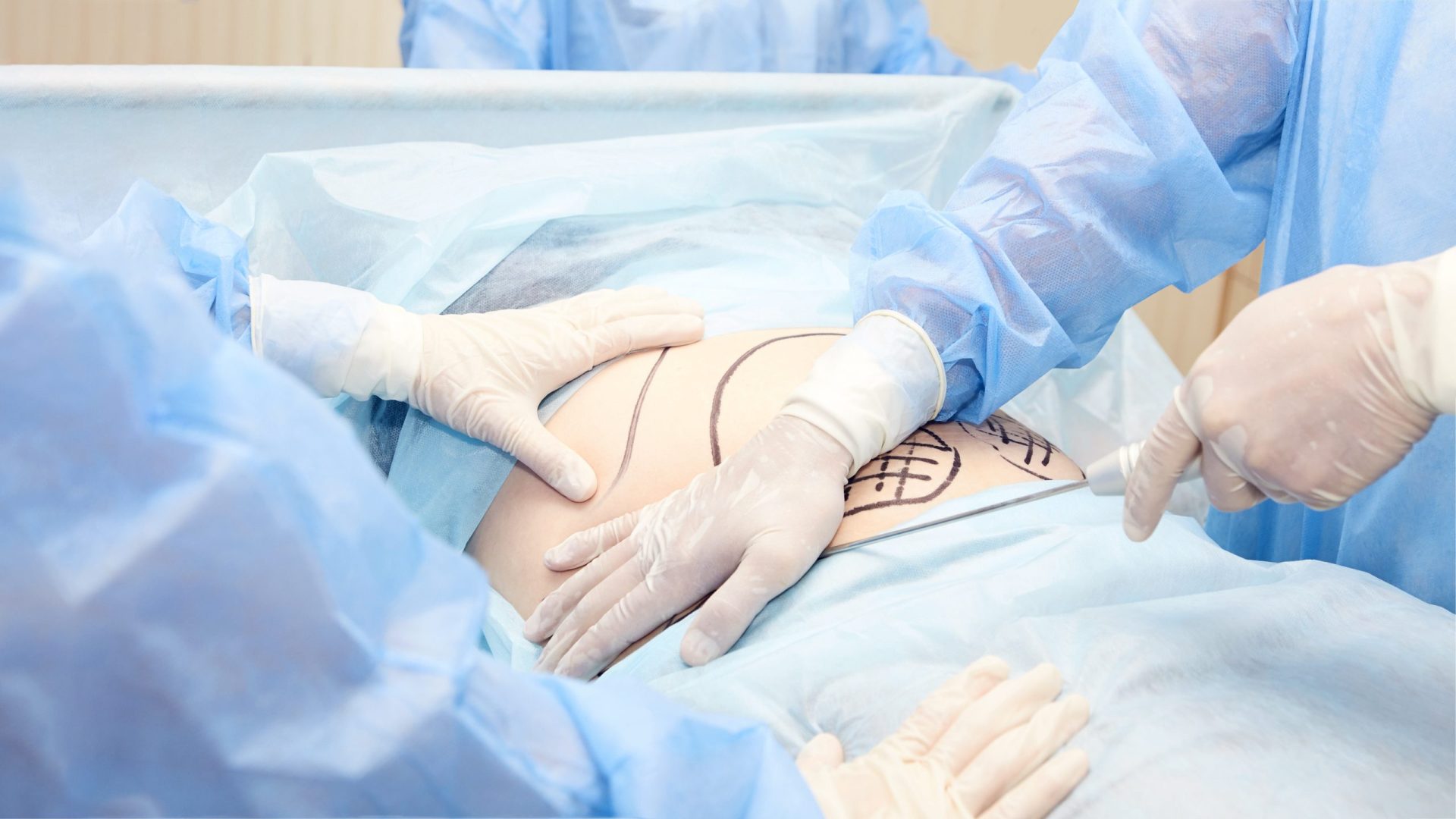
The Surgery
Before the procedure, the areas to be treated are carefully marked and documented. Through small incisions, the subcutaneous fat tissue is prepared and loosened using a special solution before liposuction is gently performed. Depending on the findings, cannulas of varying thicknesses are used. The goal is to precisely treat the affected fat tissue while sparing adjacent structures as much as possible.
It is particularly important to use a technique that is gentle on the tissue and lymphatic system. Suction is performed along the anatomical structures to protect blood and lymph vessels and minimize the risk of secondary lymphedema. A natural lubricating layer between the skin and the muscles is preserved. After the procedure, the small incisions are closed, and compression garments are applied immediately to limit initial swelling.
Anesthesia
Für die Liposuktion stehen grundsätzlich zwei Anästhesieverfahren zur Verfügung: die Vollnarkose und die Tumeszenz-Anästhesie. In unserer Klinik wird in den meisten Fällen eine Vollnarkose eingesetzt, ergänzt durch eine Tumeszenzlösung. Diese enthält unter anderem ein örtliches Betäubungsmittel, Adrenalin zur Verengung kleiner Gefäße und Bicarbonat, um das Fettgewebe für die Behandlung vorzubereiten.
Alternativ kann die Liposuktion auch in Tumeszenz-Anästhesie mit zusätzlicher Sedierung durchgeführt werden. Beide Verfahren gelten als ähnlich sicher und haben eine sehr geringe Komplikationsrate. Welche Form der Anästhesie in Deinem Fall sinnvoll ist, wird im persönlichen Gespräch mit dem Anästhesie-Team besprochen.
Supplementary measures
Im Rahmen der Behandlung können bei Bedarf auch weitere medizinisch oder ästhetisch sinnvolle Maßnahmen berücksichtigt werden, wie unter anderem Eigenfett-Transplantationen, Surgical Needling, Straffungsoperationen und Narbenkorrekturen. Welche Ergänzungen tatsächlich sinnvoll sind, hängt immer von Deinem individuellen Befund und Deinen persönlichen Zielen ab.
Aftercare – Compression Garments
Nach der Liposuktion ist das konsequente Tragen von Kompressionskleidung ein wichtiger Teil der Nachsorge. Wir empfehlen, die Kompression für insgesamt sechs Wochen tagsüber und nachts zu tragen; zum Duschen oder Waschen kann sie kurz abgelegt werden. Sie unterstützt dabei, Schwellungen zu reduzieren, das Gewebe zu stabilisieren und eine möglichst gleichmäßige Hautoberfläche zu fördern.
Wenn bereits eine passende Flachstrickversorgung aus der konservativen Therapie vorhanden ist, kann diese in den ersten Wochen nach der Operation ebenfalls sehr gut geeignet sein. Auch ein längeres Tragen kann sinnvoll sein, wenn Du das Gefühl hast, dass Dir die Kompression weiterhin guttut.
Aftercare – Nutrition
Vor und nach der Operation ist eine ausgewogene, vitaminreiche Ernährung sinnvoll, um den Körper gut auf den Eingriff vorzubereiten und die Heilung zu unterstützen. Wenn eine Diät geplant ist, sollte diese einige Wochen vor der Operation beendet sein, damit sich der Körper nicht mehr in einer Abbauphase befindet.
Nach dem Eingriff spielt außerdem eine stabile Stoffwechsellage eine wichtige Rolle. Es gibt keine spezielle Lipödem-Diät, aber längere Pausen zwischen den Mahlzeiten sowie das Vermeiden von starken Blutzucker- und Insulinspitzen kann empfohlen werden. Auch eine Gewichtsreduktion sollte nicht zulasten der Muskelmasse erfolgen.
Aftercare – Exercise and the Healing Process
Damit sich Dein Körper nach der Operation gut regenerieren kann, sollte in den ersten vier bis sechs Wochen auf Sport und anstrengende körperliche Aktivitäten verzichtet werden. Danach kann die Belastung schrittweise und kontrolliert wieder aufgebaut werden.
Das weitgehend endgültige Ergebnis einer Liposuktion zeigt sich meist nach etwa zwei bis drei Monaten. Dieser Zeitraum gilt auch als sinnvoller Abstand zu weiteren Sitzungen, falls das individuelle Therapiekonzept mehrere Eingriffe vorsieht. Verlaufskontrollen finden in der Klinik statt; zusätzlich ist bei Bedarf auch eine telefonische Rückmeldung möglich.